


How much should an office cabin glass partition actually cost? Should the founder’s cabin be specified the same way as the manager’s? And will your meeting room hold a confidential client conversation, or leak it to the open floor outside?
If you’ve asked any of these questions while planning a fit-out, you’re already ahead of most buyers. Most quotes for an office cabin glass partition across India treat every cabin as interchangeable. Same glass, same frame, same finish, regardless of what the space is actually meant to do.
This guide takes the opposite view. It walks through the four cabins almost every Indian office contains, founder, manager, meeting room and reception, and shows where premium specification earns its money, where it doesn’t, and how to get a quote that reflects your real layout, not a flat per-square-foot assumption.
Why Office Cabin Glass Partition Pricing Should Vary by Cabin Type
Most office quotations begin and end with a single per-square-foot rate applied uniformly across the floor plan. That number is convenient for procurement teams and almost always wrong for the buyer.
India’s commercial office market leased 89 million square feet in 2024 alone, a 19% jump over the previous year, according to Cushman & Wakefield, and a growing share of that space is being fitted out for hybrid use. Modern offices now blend open desks, private cabins, meeting rooms, and reception zones inside the same floor plate. Each space handles a fundamentally different conversation, so each one demands a different cabin glass partition specification.
Treating them all alike is what inflates a budget. Treating them as distinct is what stretches it.
Glass Partition for Founder & CEO Cabins
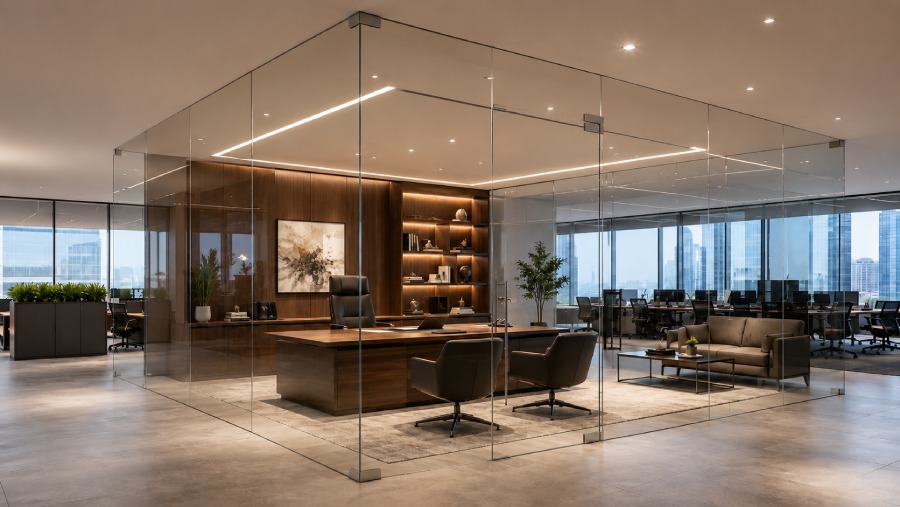
Of every cabin in an Indian office, the founder’s is the most overdetermined. It hosts HR conversations, legal calls, investor meetings and financial discussions, often back-to-back. It also sits where clients can see it from reception, reading a brand cue every time someone walks in.
The right specification rarely starts with thicker glass. Frameless toughened panels with an acoustic interlayer are the practical standard, often paired with a lower-third frosted band that gives desk-level privacy without closing the cabin off.
For a deeper dive into glass thickness and acoustic mechanics, see our office glass partition cost guide.
The mistake to avoid is over-investing in the glass while under-investing in the door. A Haworth workplace study found that nearly 30% of people working in private offices still cite acoustics as a factor that interferes with their performance, and most of those failures originate at door gaskets, floor channels, and ceiling joints, not the panel itself.
Rate tier — Premium.
Glass Partition for Manager Cabins
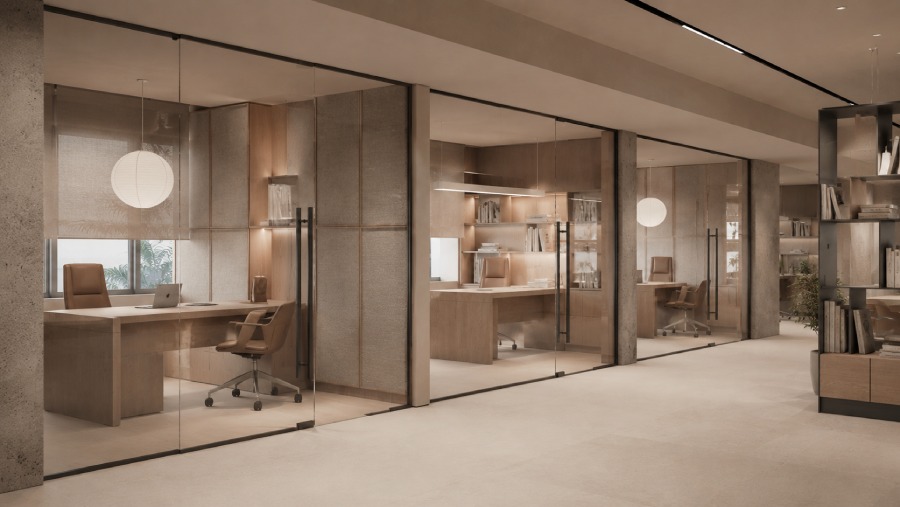
A manager cabin does a different job from a founder cabin. It exists for visibility, keeping leads close to their teams, signalling availability, and handling short approvals without disappearing behind a closed wall.
The right specification leans practical. A slim-profile aluminium framed system with toughened glass handles the daily wear of opening, closing and quick conversations. Eye-level frosted bands give just enough privacy for screen work without isolating the manager from the floor. Where the floor plate is tight, sliding doors save the swing radius that a hinged door consumes.
The mistake here is reflexive, copying the founder cabin’s spec across every manager cabin. In an SME with three or four such cabins, that single decision can effectively double the manager-cabin spend without adding proportional value.
Rate tier — Mid.
Glass Partition for Meeting Rooms
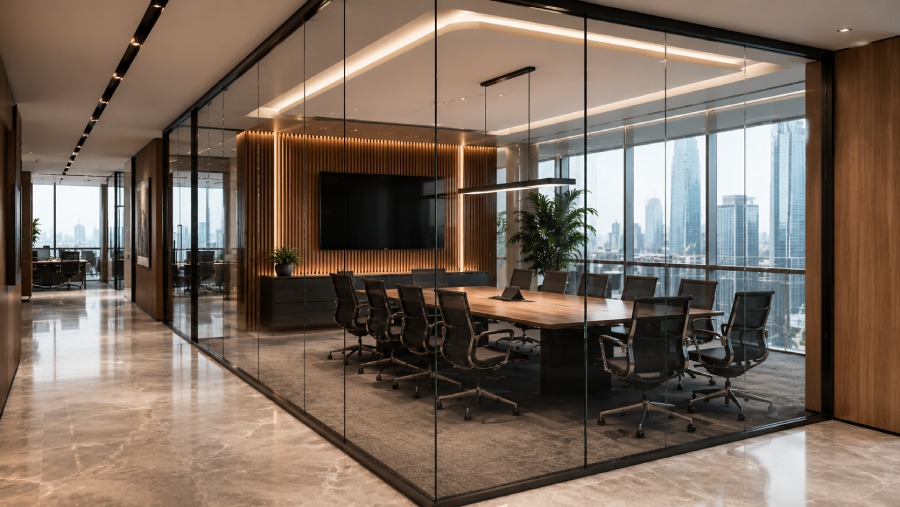
A meeting room handles client pitches, vendor negotiations and conversations that should not travel into the open office. That brief has almost nothing in common with a manager’s cabin, even when both rooms occupy the same footprint on a floor plan.
The right specification leans acoustic. Laminated glass or a double-glazed (DGU) system with proper gasketing controls sound escape; integrated blinds resolve the screen-share glare that derails pitch sessions; sliding doors keep narrow corridors usable.
Workplace acoustics research spanning more than 50,000 employees has consistently identified speech privacy as the leading source of office dissatisfaction. Inside a meeting room, that finding decides whether a client closes a deal in your space or asks to reconvene elsewhere.
Visibility is the manager cabin’s job. Confidentiality is the meeting room’s.
Rate tier — Premium to High-investment
Glass Partition for Reception
A visitor’s time in reception is a brief handful of minutes between arrival and being escorted into a meeting. In that window, they form a working judgment about how seriously to take the business they have just walked into.
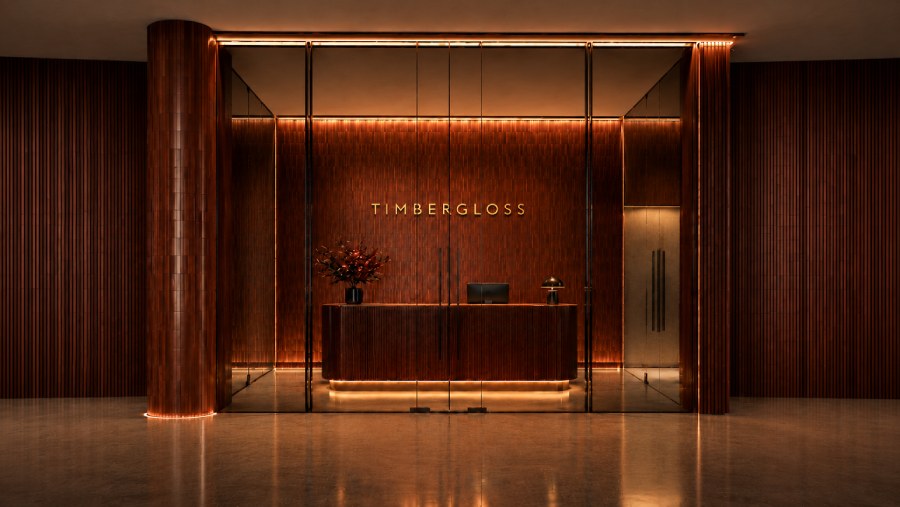
That is the commercial case for the reception partition. The right specification reads as confident: frameless toughened glass with logo manifestation, an optional curved corner where the floor plan allows, and premium hardware on the entry door, because the door is the part a visitor actually touches.
See our guide for a comparison of toughened, laminated and acoustic glass options.
The mistake here is treating reception as a place to save budget. Reception sets the mental price benchmark that every subsequent quote and invoice will be measured against. Cutting the spend here leaks into how clients price your services.
Rate tier — Premium.
Office Cabin Glass Partitions by Business Type: SMEs, Consultants, Clinics & Agencies
The right partition mix is rarely about office size; it’s about how the business uses the space. Four common patterns repeat across Indian SMEs.
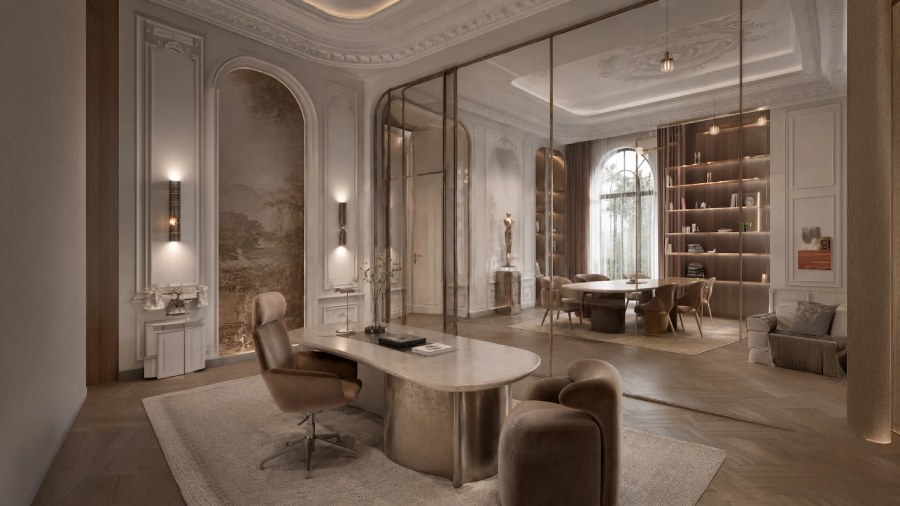
Startups and SaaS offices typically work in an open floor plan with two cabins and a meeting room. The smart move is to invest in the meeting room, where investor and client conversations happen, and run slim-profile aluminium framed systems everywhere else. Choose modular from the start, because the next office move usually arrives within two years.
Consultants, CAs and law firms lead with privacy. One founder cabin and one client meeting room are non-negotiable premium spends. Reception can be lighter than this list suggests; partners spend more time in cabins than at the front desk.
Clinics, dental and diagnostic centres carry an additional brief. Frosted manifestations are the default for patient privacy, easy-clean aluminium frame finishes support hygiene compliance, and sliding doors near treatment zones save corridor width that hinged doors waste.
Creative agencies and coworking operators benefit most from modular, relocatable partition systems. The day-one cost is higher, but the savings across two or three office moves usually pay the difference back several times over.
Common Cabin Glass Partition Planning Mistakes And How to Avoid Them
Most cabin partition problems begin at planning, not installation. Five mistakes recur across projects.
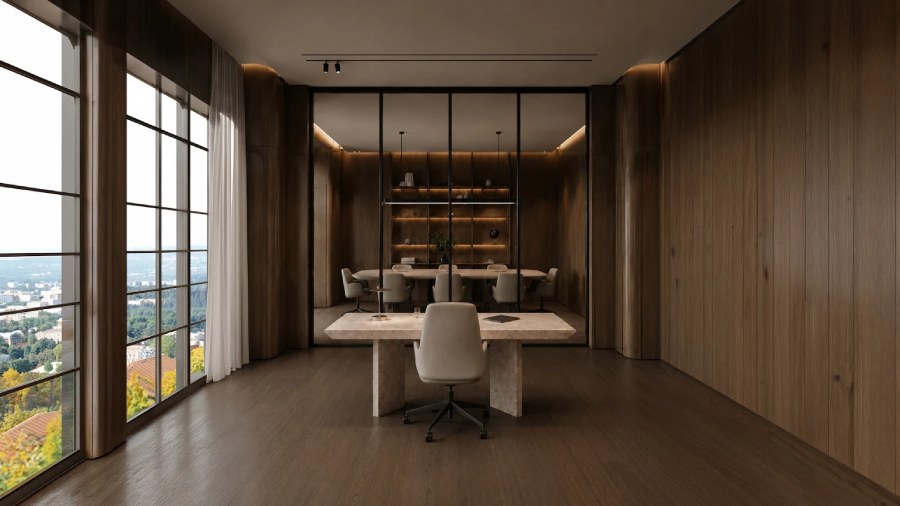
1. Founder’s cabin is placed next to high-traffic corridors without an acoustic upgrade. The cheapest correction is moving the cabin one wall over. The most expensive is replacing the glass after handover.
2. Door swing is ignored in narrow cabins. A standard hinged door sweeps roughly half a square metre of floor when it opens. In a compact 80 sqft manager cabin, that is around seven percent of the room, is recovered fully by a sliding door.
3. Every cabin is specified with the same glass to simplify procurement. Procurement saves a few hours. The buyer overspends on the cabins that didn’t need premium glass, and underspends on the ones that did.
4. Cabin partitions are not aligned with the false-ceiling grid. Partitions hitting ceiling tiles mid-pattern look unfinished and cost extra labour to retrofit. Coordination upstream costs nothing.
5. Frameless reception specified without checking floor levelness. Frameless systems are intolerant of uneven floors. A site survey before procurement saves the rework that a no-survey quote always quietly assumes.
How Many Glass Cabins Does Your Office Actually Need?
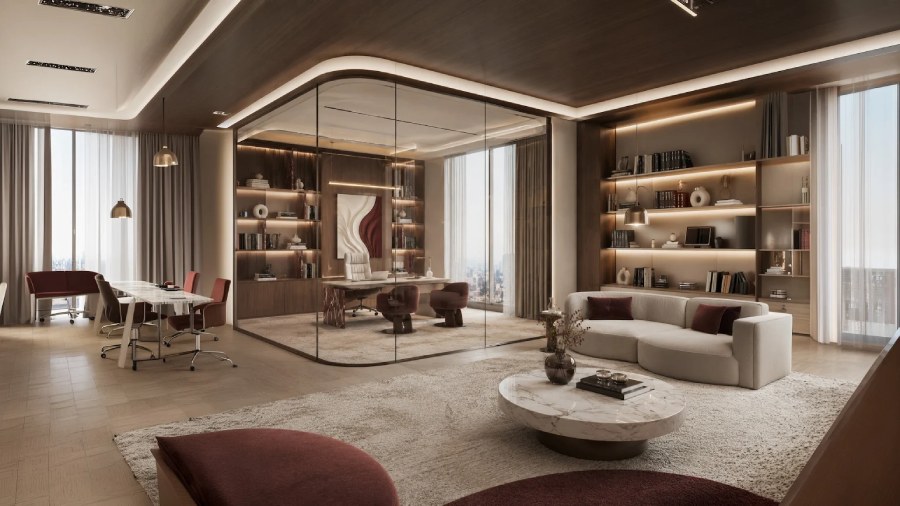
Cabin counts are usually inherited from the previous office, not designed for the new one. A simpler approach: build the count from how the business actually runs.
- One founder cabin if leadership takes three or more confidential calls a day. Below that, a bookable phone room often does the same job.
- One meeting room per eight to ten client-facing employees. Less creates booking conflicts; more wastes prime floor area.
- Manager cabins only for roles that approve, hire, or handle disputes. Roles that mostly attend meetings function better at an open desk.
- A reception partition becomes worthwhile at two or more walk-in clients a day. Below that, a designed welcome zone does the work at a fraction of the cost.
Build the cabin count to the work, not to the template you inherited.
Office Cabin Glass Partition Rates: A Quick Reference
The four cabin types map to clear rate tiers. Use this as a planning shortcut; refine once a floor plan is on the table.
| Cabin Type | Rate Tier | What Drives the Spec |
|---|---|---|
| Founder / CEO Cabin | Premium | Acoustic isolation + brand presence |
| Meeting Room | Premium to High-investment | Confidentiality, integrated blinds, and sealing |
| Manager Cabin | Mid | Volume is usually the most cabins on the floor |
| Reception | Premium | Visible to every client who walks in |
For the technical breakdown of what moves a partition into each tier, glass thickness, frame system, hardware grade and acoustic interlayers
What to Send a Vendor for an Accurate Cabin-Wise Quote
A cabin-wise quotation is only as accurate as the brief that produces it. Send the following before asking for numbers
- Floor plan with each cabin labelled by intended use — founder, manager, meeting room, reception.
- Confidential-call volume per cabin — decides whether acoustic glass is essential or optional.
- Door swing preference — hinged or sliding, in or out, affects floor area.
- Ceiling height variations if the false ceiling differs across cabin zones.
- Branding artwork for any cabin requiring logo manifestation or frosted bands.
- Lease or own? Owned offices accept permanent fixings; leased offices benefit from modular systems.
For a structured cabin-wise RFQ template you can use with any vendor, request a copy from our contact form. With that brief in hand, comparing quotes becomes meaningful rather than three fundamentally different numbers for the same job.